

Brand:Olympus
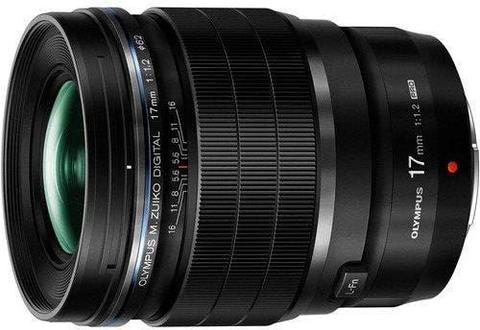
Olympus M.Zuiko PRO 17mm f/1.2 Black Lens
Sold by Camera House

Same price since 22 Oct
Unchanged since we started tracking
We may earn a commission at no cost to you. How it works
Price history
Tracking resumed 22 Oct · 26 days
- Now
- $1,679
- Recent low
- $1,679
- Earlier low · 2021
- $1,529
Since tracking resumed · last 26 days
About this product
- Brand
- Olympus
- Store
- Camera House
- Category
- Cameras & Optics > Camera & Optic Accessories > Camera & Video Camera Lenses > Camera Lenses
- SKU
- V311100BW000
Specifications
- Colour
- Black
The technical details behind this lens
Olympus M.Zuiko PRO 17mm f/1.2 Black Lens offers remarkable performance. This lens features a fast f/1.2 maximum aperture that supports working in difficult lighting situations and affords extensive control over depth of field for selective focus techniques. In regard to the optical design, the one Super Extra-Low Dispersion element, three extra-low dispersion elements, one Extra-Low Dispersion Dual-Sided Aspherical element, one Extra-Low Dispersion Aspherical element, one Super High Refractive Index element, and one aspherical element, which work together in concert to control chromatic and spherical aberrations for enhanced clarity, reduced colour fringing, and improved sharpness. Offering A Z Coating Nano, this feature has been applied to individual lens elements to reduce surface reflections and prevent lens flare and ghost effects for improved contrast and colour neutrality in strong lighting environments.
Movie and Still Compatible
Featuring an MSC autofocus system, along with an internal focusing design, It delivers quick, quiet, and precise focusing performance to benefit both still photo shooting and movie recording. An MF clutch is used for fast changing to manual focus for more precise control.
Reliable Features
The weather-sealed design guards the lens against moisture, dust, and freezing temperatures for working in difficult conditions. This lens also features a rounded nine-blade diaphragm that contributes to a pleasing bokeh quality.
Key features
- Aperture Range: f/1.2 to f/16
- Micro Four Thirds System
- 34mm (35mm Equivalent)
- Rounded Nine-Blade Diaphragm
Top three Reasons we think you will love this lens
- Great Optical Design
- Exceptional Fast f/1.2 Maximum Aperture
- Four ED Elements, One ED-DSA Element
Our expert's opinion
The M.Zuiko Digital ED 17mm f/1.2 PRO. The ED-DSA lens possesses the characteristics of both ED (Extra-low Dispersion) and DSA lens1 elements, of which Olympus was the first manufacturer to successfully mass produce. The ED-DSA lens makes it possible to significantly reduce the number of required lens elements, resulting in a lighter product. This construction also effectively compensates for various types of aberrations that tend to occur on wide-angle lenses, such as comatic aberration, distortion, and colour bleeding on the image periphery (magnified chromatic aberration). Extensive use of special lenses incorporated into 15 elements in 11 groups makes outstanding imaging performance possible.